Carbonated alkali-activated cementitious material with radiative cooling properties for urban heat mitigation
Abstract
Urban areas generate 70% of global CO2 emissions, with cement production contributing 8% while exacerbating urban heat islands that increase cooling demands. To address these interconnected challenges through cleaner production methodologies, this exploratory study developed carbonated alkali-activated cementitious materials through ambient pressure carbonation of upcycled ground granulated blast furnace slag (GGBS) and calcium hydroxide composites (25–75 wt%). Utilizing a low-energy material pelletization technology, specimens were characterized using XRD, TGA, Raman spectroscopy, and SEM. Radiative cooling performance was evaluated through spectral measurements and field testing in desert conditions. The optimized formulation indicates promising exceptional CO2 sequestration (18.6 wt%) through mineralization. Solar reflectance index reached 90, significantly exceeding conventional white concrete (SRI ≈ 80) and approaching commercial cool materials (SRI ≈ 85–119). Field testing demonstrated 16°C lower surface temperatures compared to ordinary Portland cement under 1000 W/m2 solar irradiance in Almeria’s Desert. Microstructural analysis revealed synergistic carbonation-pozzolanic reactions creating dense matrices with hierarchical pore refinement. This dual-benefit approach simultaneously addresses embodied and operational carbon emissions, offering transformative potential for sustainable urban infrastructure. The material’s exceptional cooling performance rivals specialized systems while capturing substantial atmospheric CO2, representing a paradigm shift toward carbon-negative cleaner materials.
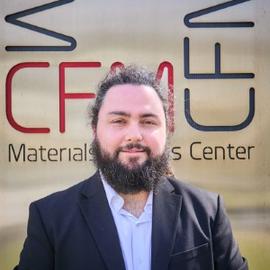
Tomas Stephen Northam de la Fuente
Post doctoral researcher
Postdoc at the Materials Physics Center, Donostia.